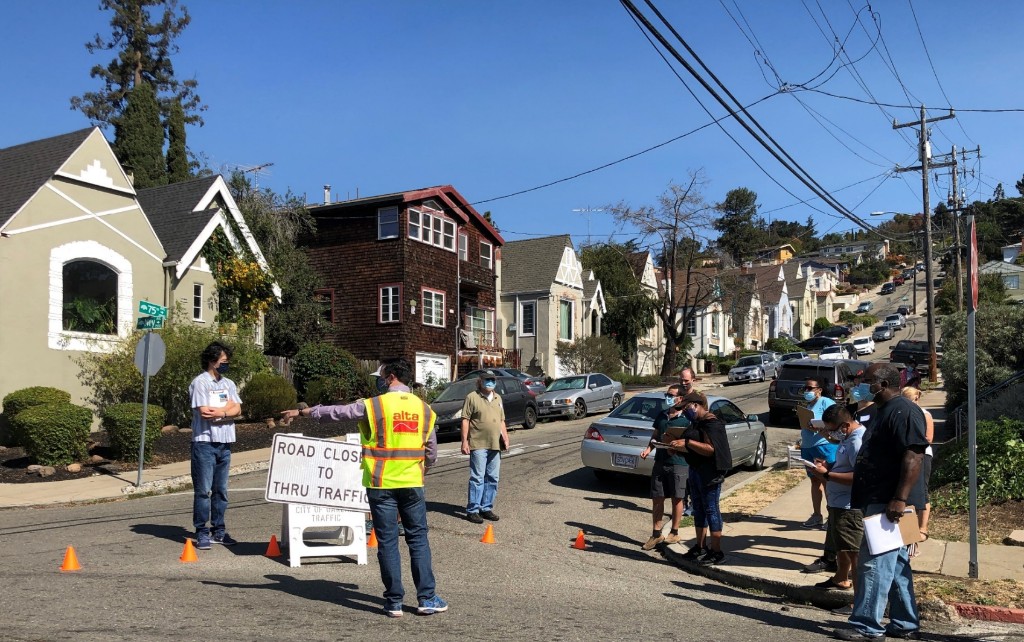
Over 10,000 cars a day travel through the Lower Rockridge Trapezoid. After 15+ years of residents lobbying the City, years of studies, 2 petitions with hundreds of signatures requesting traffic volume reduction, 2 years of meetings, it's time for action.
The Rockridge "trapezoid" — the residential area bounded by College, Claremont, Telegraph, and Alcatraz Avenues — has become a major cut-through corridor. Waze, Google Maps, and gig-economy routing send thousands of commuter vehicles daily onto streets never designed for that volume.
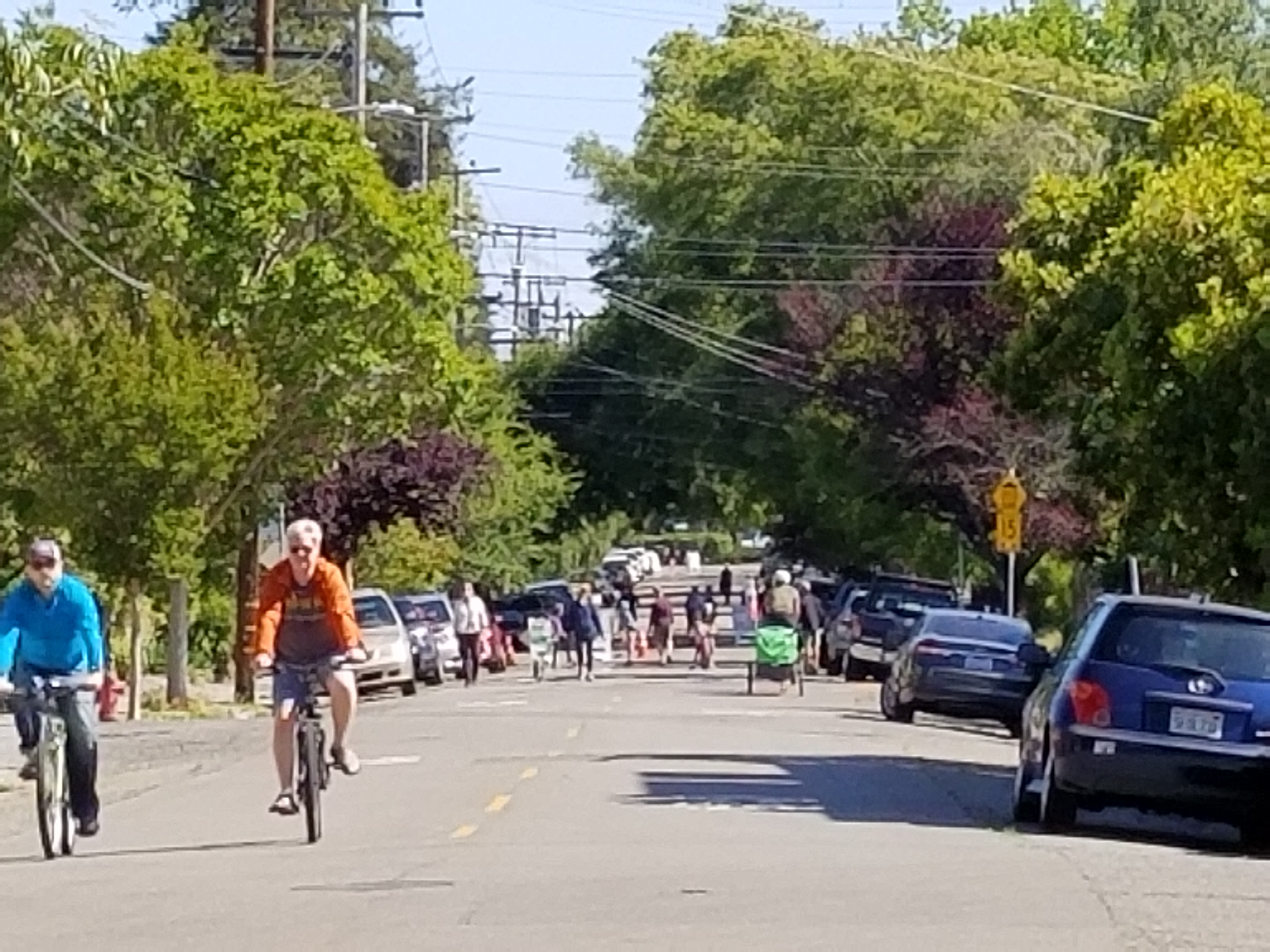
There's a preschool on Colby Street. During rush hour, up to 400 cars per hour can race past — residents can't safely exit their driveways, and families can't safely cross the street.
Colby is Oakland's designated bicycle boulevard — a primary bike corridor connecting neighborhoods across North Oakland and South Berkeley. NACTO guidance establish as a ceiling 50 cars per hour and 2,000 per day on a bike boulevard. During rush hour we hit 400 — 8× the hourly limit — and daily volumes reach 4,000, 2× the daily threshold.
The new Jewish Community Center (JCC) facility will generate up to 338 additional peak-hour vehicle trips — source: California Environmental Quality Act (CEQA) study conducted as part of the JCC remodel permitting process. Waymo is coming to Oakland in 2026. New developments on College Ave will add even more.
The vast majority of traffic on Colby and Hillegass is cut-through — drivers following navigation apps like Waze and Google Maps that route them through residential streets to shave time off their commute.
This isn't anecdotal. It's been measured by community traffic counters, confirmed by OakDOT surveys, and modeled by career-long experts on California traffic using professional modeling tools.
| Street | Measured ADT | Max Threshold | Status |
|---|---|---|---|
| Colby St (bike boulevard) | ~3,500 | 2,000 (FHWA and OakDOT bike route) | 175% over limit |
| Colby St (projected w/ JCC) | 5,000+ | 2,000 (FHWA and OakDOT bike route) | 250%+ over limit |
| Hillegass Ave | ~1,900 | 700 (FHWA local street) | 271% over limit |
| Hillegass Ave (projected w/ JCC) | ~2,400 | 700 (FHWA local street) | 343% over limit |
| Martin St | ~2,000 | 700 (FHWA local street) | 286% over limit |
| Martin St (projected w/ JCC) | ~2,300 | 700 (FHWA local street) | 329% over limit |
OakDOT Director Josh Rowan designed a diverter-based pilot project — the standard traffic engineering tool used worldwide for exactly this problem.
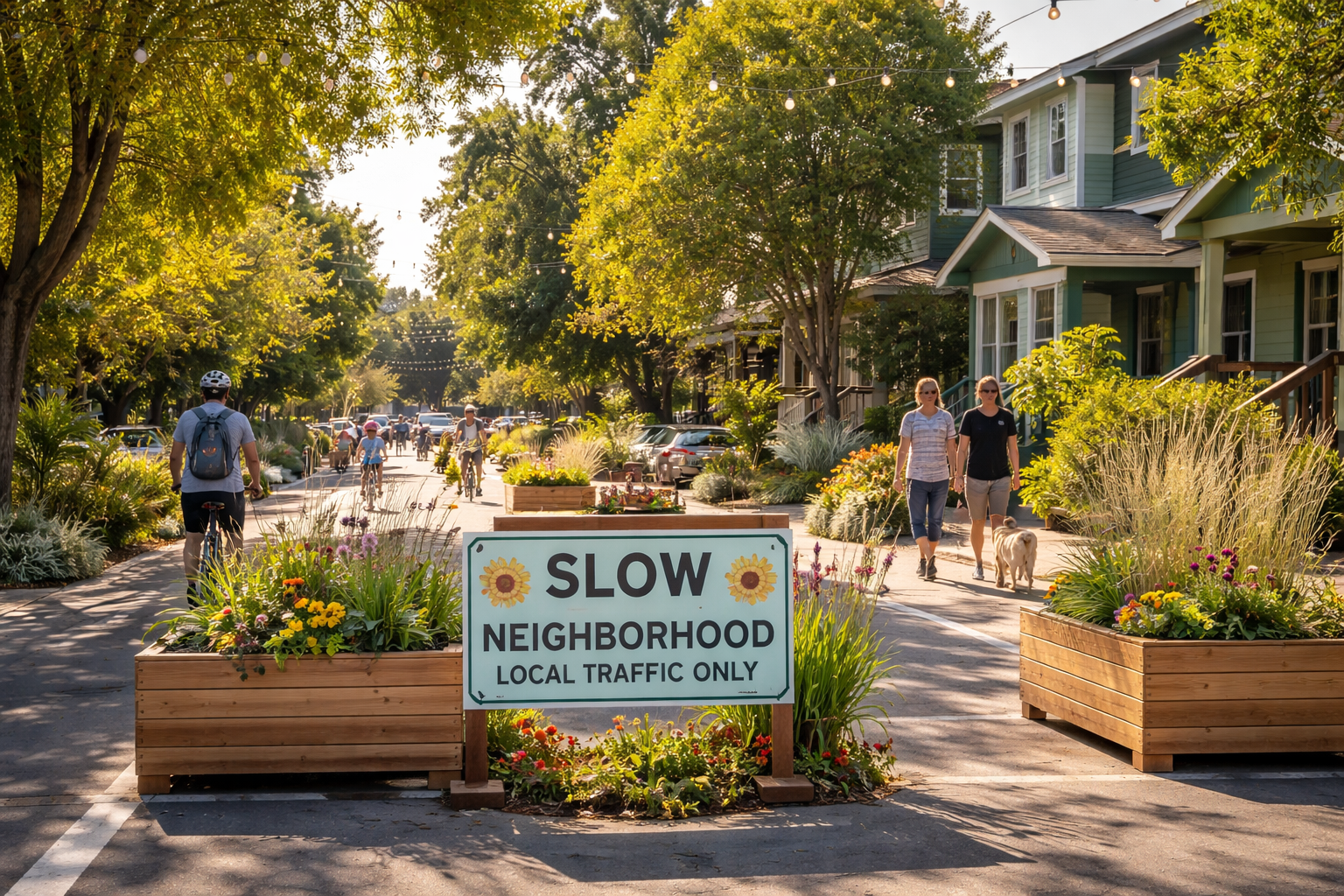
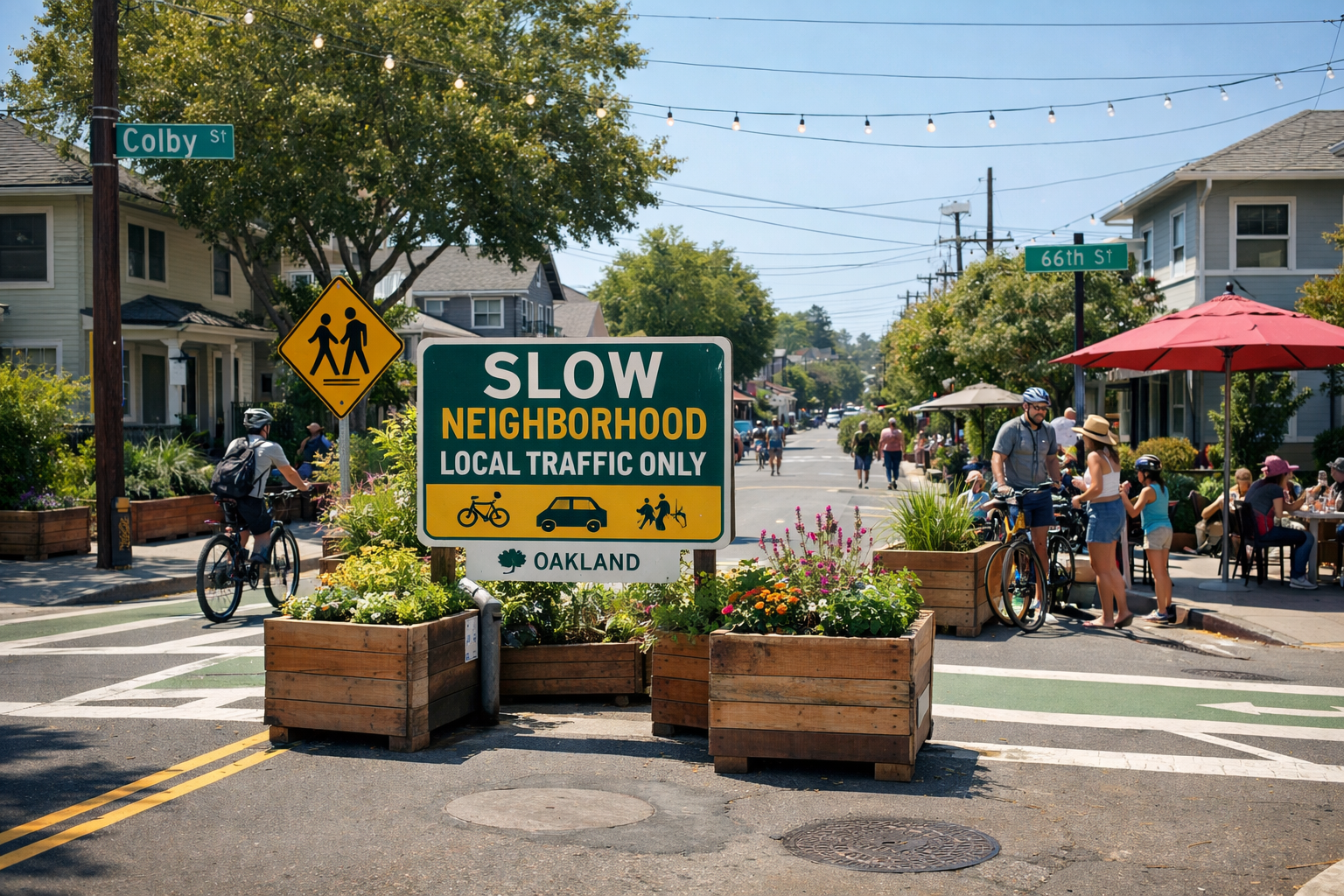
3-month pilot using posts, paint, and planters. Nothing permanent. No concrete. Can be adjusted or removed based on measured results.
Extremely affordable by city infrastructure standards. Planters are already in the city's possession.
Diverters are used in Paris, Bologna, London, and Berkeley (just blocks north across Alcatraz). This is not experimental — it's proven urban design.
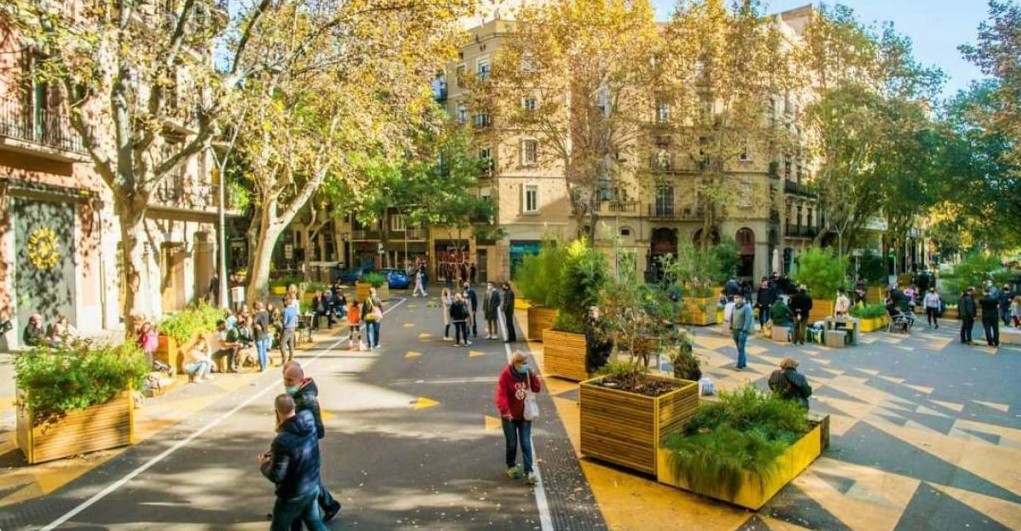
Inspired by Barcelona's superblocks — a proven model that reclaims residential streets from through-traffic, reducing noise and pollution while creating safer, more livable neighborhoods. Cities worldwide are adopting this approach.
Diverter-based pilot proposed by OakDOT is the most impactful on traffic and most effective use of taxpayer dollars.
| Treatment | Impact on Traffic Volume | Affordability | Effectiveness (Impact × Affordability) |
|---|---|---|---|
| Diverters Physical barriers (planters, bollards) allowing walking, biking |
★★★★☆ |
||
| Cul-de-sacs / Dead-end Street Networks Terminates street connectivity for cars while keeping pedestrian/cyclist access |
★★★☆☆ |
||
| Turn Restrictions / Vehicle Access Controls Regulatory limits (e.g., no left-turns into, residents-only access windows) |
★★★★★ |
||
| Road diet Reduce the number or width of travel lanes |
★★☆☆☆ |
||
| Traffic circle Raised or painted circles at intersections to slow traffic |
★★☆☆☆ |
||
| Speed hump/table Vertical deflection devices placed mid-block |
★★★★☆ |
already in place
|
|
| Chicanes Alternating curb extensions or parking shifts creating an S-curve |
★★☆☆☆ |
||
| Curb extension Tightened corner radii and shorter crossings |
★★☆☆☆ |
||
| Signage only Posted signs without physical enforcement |
★★★★★ |
Misinformation has circulated in the neighborhood. Here's what the data and OakDOT's own assessments actually show.
"The pilot is a bait-and-switch and will remain permanent"
The pilot is a first measure, reversible if deemed ineffective, of a multi-year process to try out other measures and ultimately squeeze cut-through traffic out of the trapezoid altogether.
"Diverters don't reduce traffic"
Modal filters such as bollards, boom barriers, and planters are cheaper and work better than speed bumps and typically achieve 60% traffic volume reduction, e.g. Portland, OR, San Francisco, CA, and London, UK.
"Better solutions have been identified"
"Overall, I would deem the [work group] effort to be a failure [...]. During the process, some good ideas were developed that warrant consideration from the neighborhood. These ideas are not really what I would consider a 'pilot.'" — Josh Rowan on 04/19/2025
"This will just push traffic to other streets"
Traffic modeling by career-long experts on California traffic using professional modeling tools estimated ~60% reduction in cut-through traffic, an impact consistent with similar pilots both far away, in Portland, OR, London, UK, and next door, in Berkeley on the other side of Alcatraz Avenue — see references on Appendix page.
"The community rejected diverters"
"Some members of [the working] group chose to bypass the established process and work directly with my engineering staff. This was an act of bad faith..." — Josh Rowan on 04/19/2025. "I did not unequivocally take diverters off the table" — Josh Rowan on 08/19/2025.
Residents have been asking for help since 2007. The data is in. The solution is designed. What's missing is implementation.
These successful traffic calming projects demonstrate proven approaches to reducing cut-through traffic and improving neighborhood safety.
The JCC remodel will add 338 peak-hour vehicle trips to streets already far over capacity. This Fehr & Peers transportation analysis quantifies the additional traffic burden on College Avenue, Chabot Road, and surrounding residential streets — making the case for diverters even more urgent. Prepared by Lamphier-Gregory, October 2024 (Case PLN23117).
View CEQA Analysis (PDF) →
Barcelona's superblocks achieved a 25% reduction in through-traffic and a 17% decrease in NO₂ pollution by restricting vehicle access to local-only within multi-block zones. Streets formerly dominated by cars became public spaces for walking, cycling, and community life — with no major infrastructure cost. The model is now replicated in cities worldwide.
Barcelona Superblocks — Reclaiming Streets for People →Diverters deliver 65% traffic volume reduction — the highest of any treatment — and score 260% on combined effectiveness (impact × affordability), far above the 100% threshold. By comparison, signage alone achieves just 3% reduction. Data compiled from FHWA, NACTO, and peer-reviewed transportation research.
Gorove Slade's 2020 report reviews cut-through mitigation programs across nine U.S. municipalities. Key findings: turn restrictions achieved 70–90% traffic reduction in some cases; Waze and navigation apps have exacerbated cut-through issues; jurisdictions often pivot from street-specific to jurisdiction-wide traffic calming when localized mitigations push problems to other neighborhoods.
Read the report (PDF) →A 3-week diverter pilot in East Oakland that reduced cut-through traffic by 65–75% using a single diagonal traffic filter. Speeds dropped by up to 4 mph near East Oakland Pride Elementary, and the school principal reported dramatically calmer conditions — proof that diverters work quickly and decisively.
Read the full report →
Oakland's own study showing diverters successfully redirected non-local traffic off residential streets while preserving full access for residents. The physical barriers eliminated shortcutting without displacing meaningful volume to adjacent streets.
Read the study →
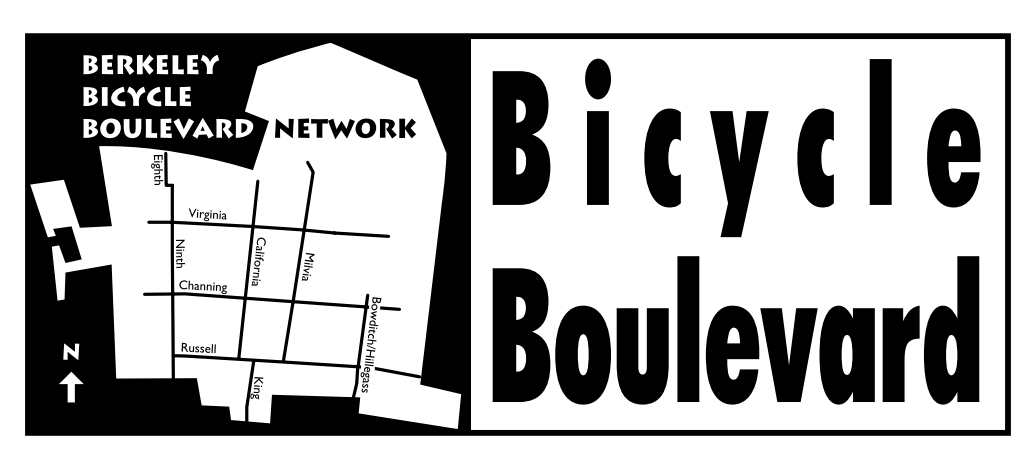
Just blocks north of our neighborhood, Berkeley used diverters on Hillegass Avenue to keep traffic volumes below 1,500 ADT on their bicycle boulevard. The same street crosses into Oakland and immediately jumps to nearly 2,000 ADT — demonstrating exactly what happens without traffic calming.
Read the guidelines →NACTO documents how Berkeley's Channing Way diverter eliminated cut-through traffic while enabling safe bicycle crossings at a major intersection. The project uses loop detectors and protected platforms — a model for combining traffic reduction with active transportation safety.
View case study →Every email matters. City officials have said the silence was being interpreted as fading interest. Let them know that's wrong.
Add your name to show city officials this community demands action now.